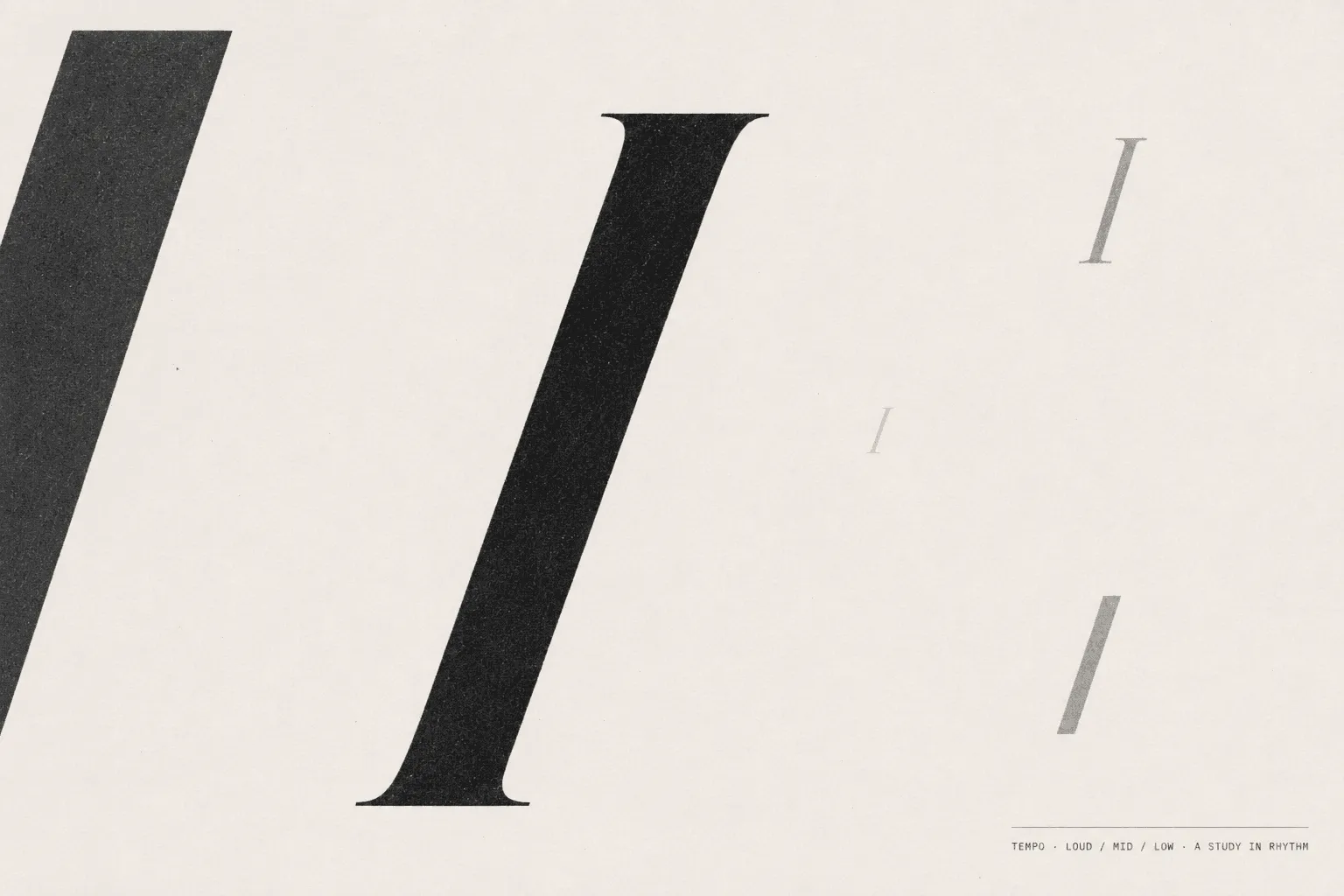
A brand system is a piece of music. There is a tempo, a chorus, a verse, and a long bridge where very little happens at all. The mistake we see most often — in pitch decks, in design audits, in the marketing pages of design tools — is to treat every surface as a chorus.
The short-form moments — the logotype on a coffee bag, the favicon, the launch tweet — earn their loudness by being rare. The long-form moments — the brand book, the editorial pages, the email footer — earn their quietness by being everywhere.
Lay out twenty surfaces of the brand in front of you. If three of them are louder than the other seventeen, the system is breathing. If twelve are loud, the system is shouting. Edit until it whispers, then add one shout back.
“A brand system that survives a quarter is one whose chorus you remember. A brand system that survives a decade is one whose verse you can still hum.”
The shape of a verse
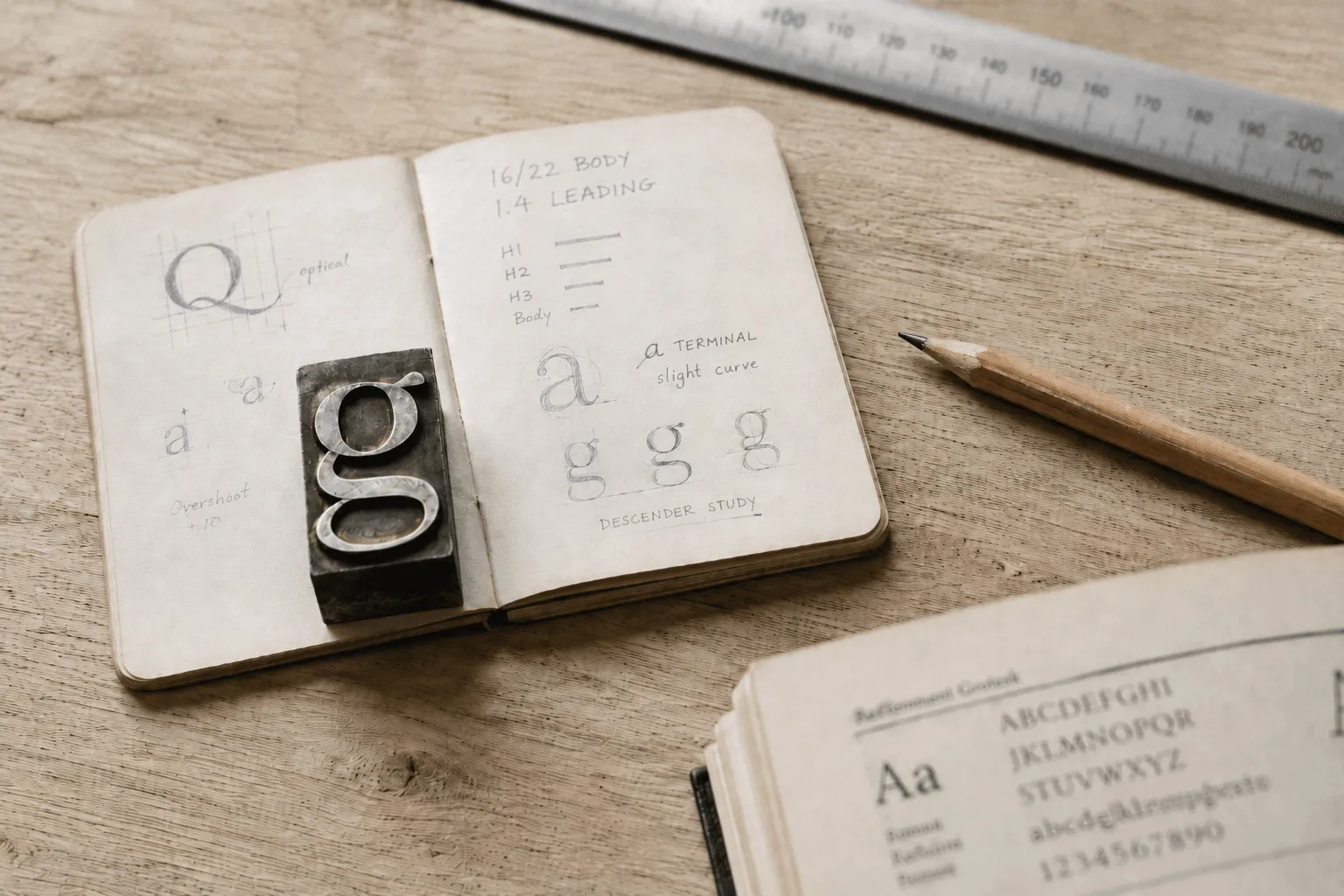
Most of our work on a brand system is on the verse — the part nobody photographs. A grid that holds a 14-point body in a 380-pixel column. A footer that doesn’t beg for attention. A loading state that isn’t trying to be charming. A 404 page that simply says, in good type, that the page isn’t there.
You can audit the verse with a single sentence: what does a customer see for the longest, on the dullest day? Whatever the answer is — usually a transactional email or a checkout page — that is the surface that needs the most care.
/* The rhythm in code */
:root {
--tempo-loud: clamp(3.5rem, 8vw, 9rem);    /* hero */
--tempo-mid:  clamp(1.5rem, 2.4vw, 2.2rem); /* section */
--tempo-low:  17px;                         /* body */
}
When to break the rhythm
Once or twice a year. A campaign launch. A milestone. A guest art director. The rule is simple: the break is felt because the rule was kept. A brand system that is never broken is a system that’s already broken — but a brand system that is broken every Tuesday is a system that doesn’t exist.
Studio Nord designs the rule and the exception together. The exception is part of the document. We write it down so the founder can hand it to the next designer and the rhythm survives the hire.